

The average wage of the typical American worker rose by just 3% over the past six months on a seasonally-adjusted basis. That would be right in line with the pre-pandemic average, and notably slower than the steady annualized average growth rate of about 4.1% that prevailed between mid-2023 and mid-2025.
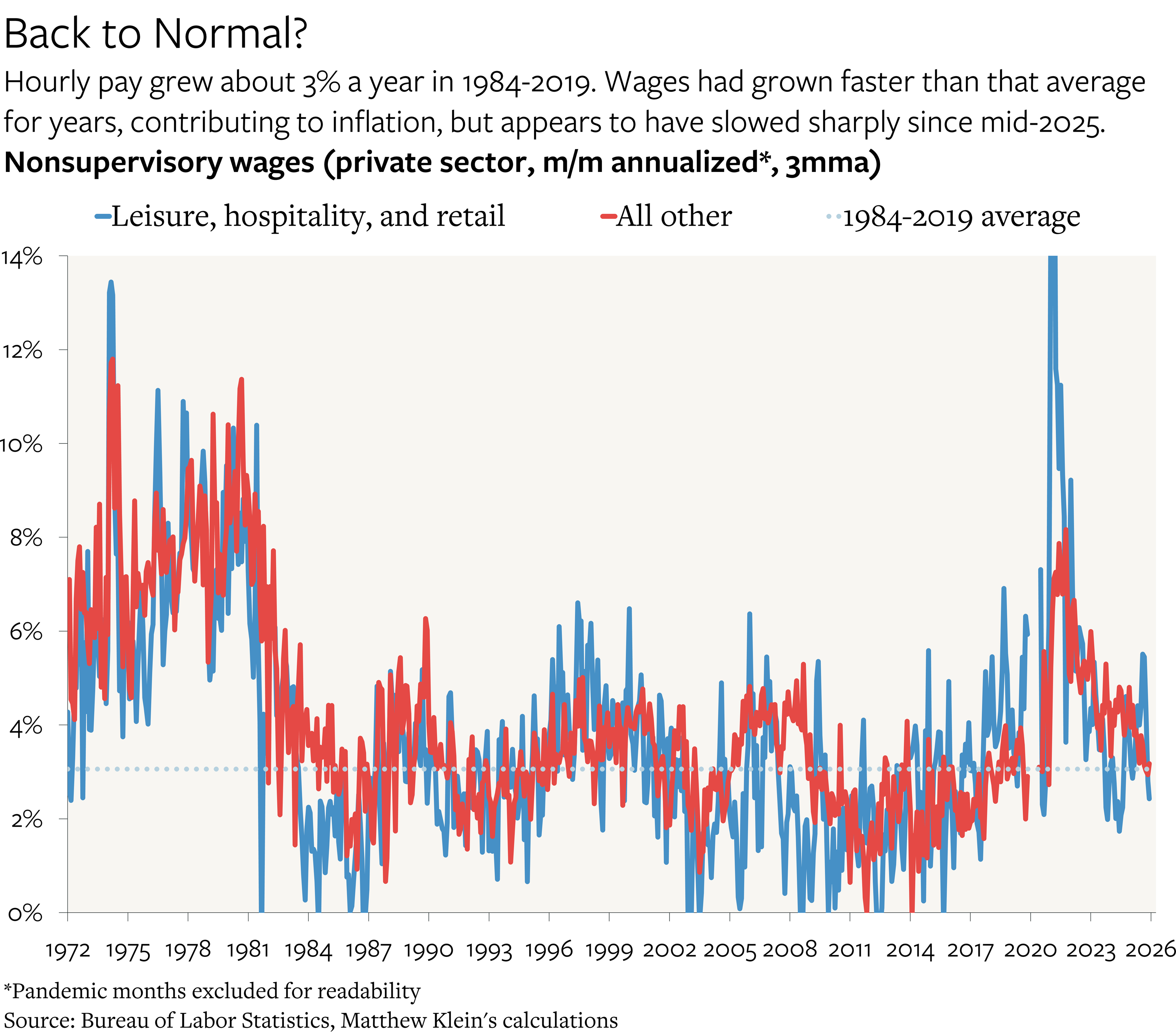
The deceleration is notable for several reasons:
It would imply that wage growth is no longer running faster than the pre-pandemic norm, which could have benign implications for the inflation outlook
It is an abrupt slowdown after years of stability, which could potentially reflect the lagged impact of job market weakening
It is entirely a function of a sharp slowdown within the “private education and health services” sector—which is odd, because, until now, wage growth in this category has tended to behave just like the rest of the economy, on average, which cannot be said for other industries
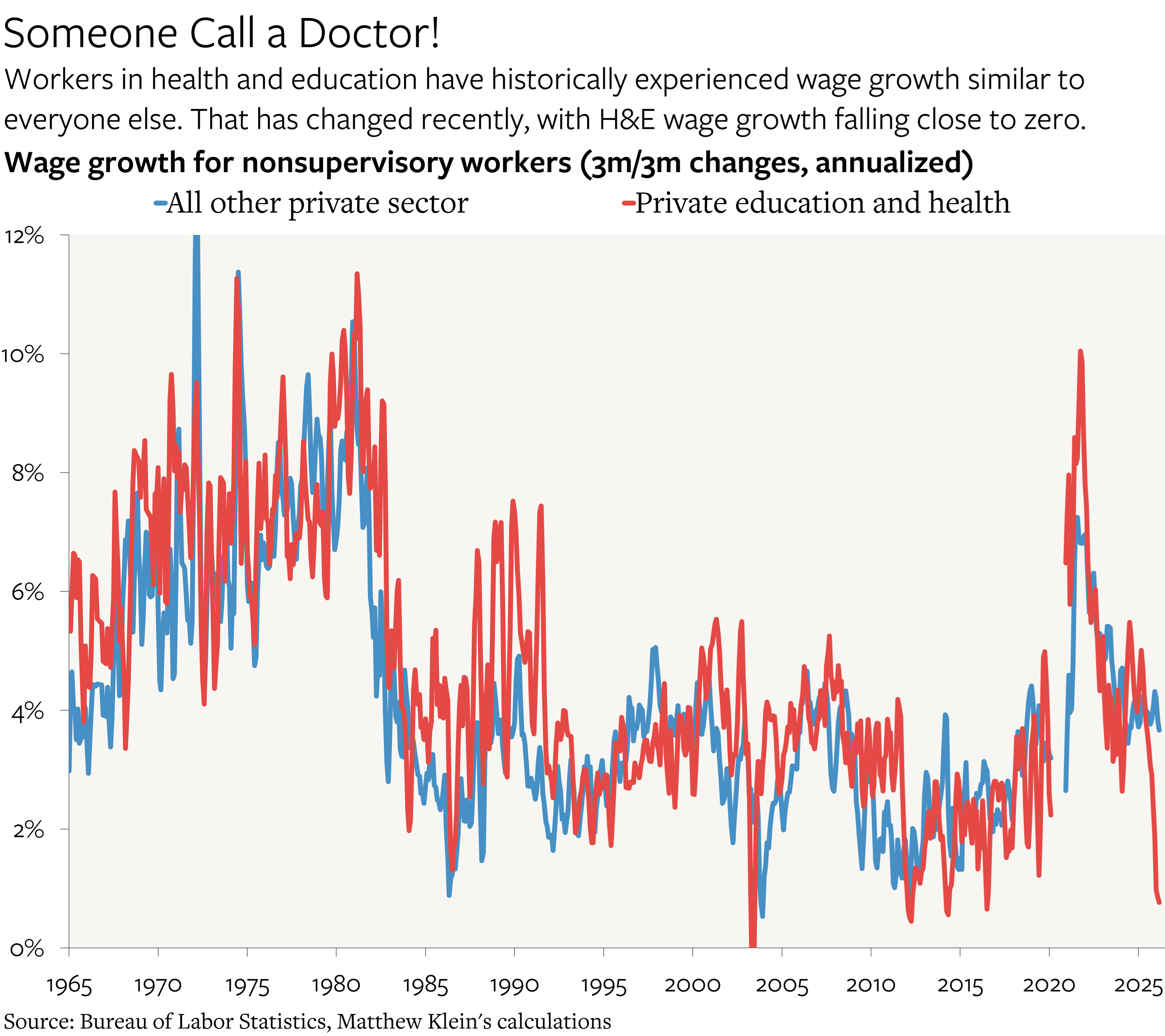
The details of the apparent wage slowdown matter. If it is genuine, it would imply that the set of interest rates that made sense in the past might now be too high. If, however, the deceleration is a fluke attributable to idiosyncratic factors and/or measurement error, then policymakers should ignore it.